Client:
Menard Oceania
Menard Oceania link opens in a new tab
Project Owner:
Port of Brisbane Pty Ltd
Port of Brisbane Pty Ltd link opens in a new tab
Automated ground movement and vacuum pressure monitoring, improving efficiency and safety during land reclamation works for Queensland’s largest port
The Port of Brisbane Project
Located at Fisherman Islands where the Brisbane River meets the sea, the Port of Brisbane is Queensland’s largest multi-cargo port and the third largest in Australia. The port plays a pivotal role in facilitating the state’s economy, as 95% of containerized freight and motor vehicles, as well as half of its agricultural exports, pass through its gates.
In anticipation of forthcoming development for the next 25 years, the port has commenced an adjacent land reclamation project to accommodate future growth. The successful completion of this undertaking will result in the creation of approximately 235 hectares of newly reclaimed land.
The Challenges
As part of the Future Brisbane Port Expansion, Menard Oceania has been engaged by the Port of Brisbane to perform soil improvement for the Paddock B1 expansion area. They are utilising Menard Vacuum technology, which involves creating negative pressure under an airtight membrane placed over the soil. Given the complexity of the construction process, it is crucial to monitor the performance of the vacuum system and ground settlement.
To address this requirement, Menard Oceania has contracted Sixense for its innovative solution to automate the monitoring process. The goal is to automate monitoring, improving frequency, reliability, and efficiency while reducing on-site personnel and gaining valuable project insights.
What we’ve delivered
Sixense Oceania has installed instruments for monitoring ground movements and vacuum pressure. The implemented solution includes various geotechnical sensors, such as inclinometers, extensometers, and piezometers. To enable automated pressure readings, pressure transmitters have also been installed.
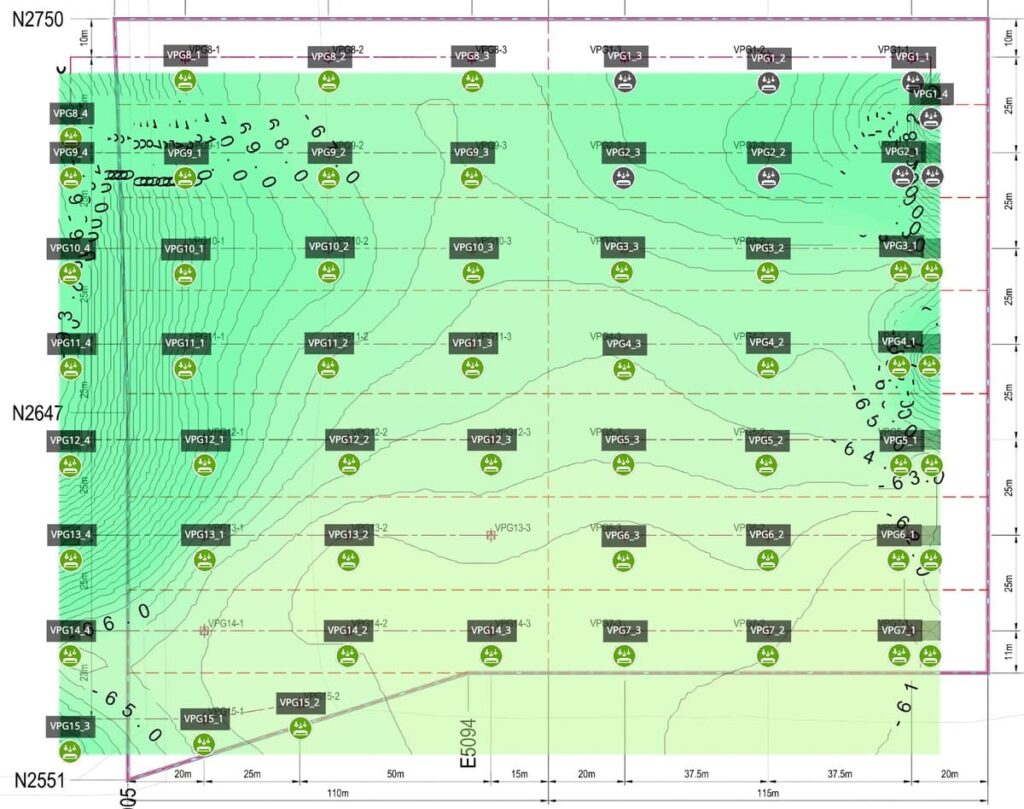
To ensure seamless data integration, generate detailed reports, and promptly alert stakeholders in case of sensor threshold exceedance, Beyond Monitoring is being employed. Additionally, an isoline map has been developed for pressure transmitters to provide a clear visualisation of pressure level evolution and quickly identify potential membrane leaks.
Images of the project
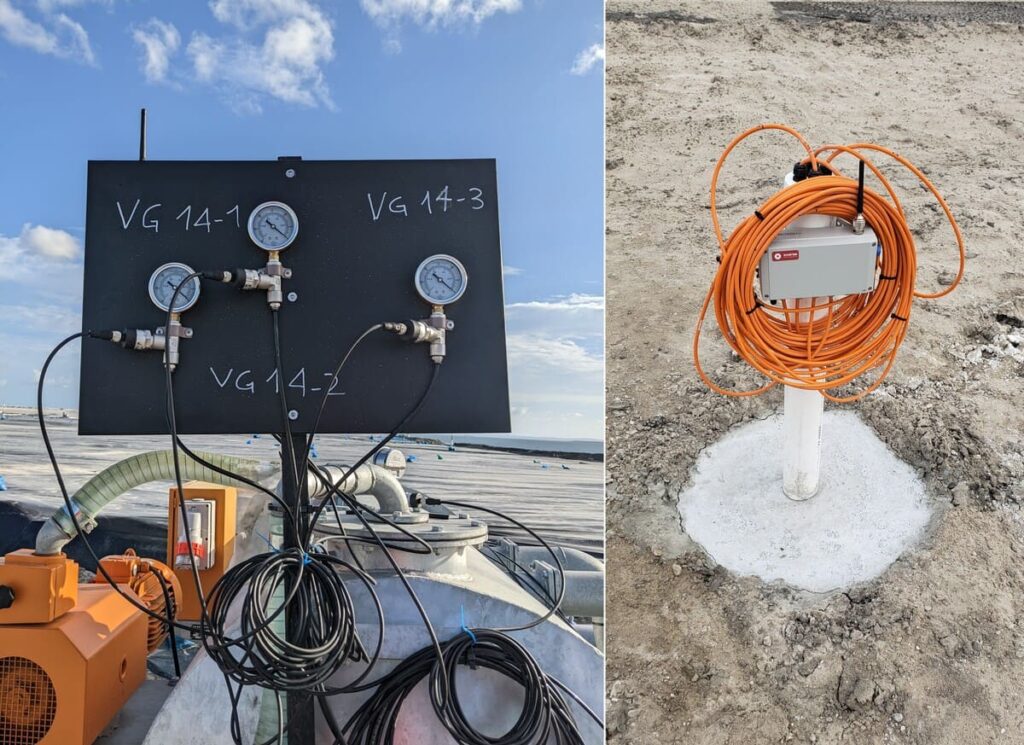
Piezometers
Pressure Transmitters
Extensometers
Inclinometers